Urban Evolution of Seville's historic architecture
Conocer la historia of a city involves not only know the sequence of historical events that marked most relevant. The city is a living space that is built along the story and to understand its morphology and idiosyncrasies can be helpful to building development through a graphic medium. Thus, when buying a flat Sevilla is more important to know when and how they became urbanized a district, a list of seemingly unconnected historical events of the materiality of the plot. Therefore, the basis on which parties to this analysis is the review of the evolutionary sequence of planes that came up, which are superimposed different enclosures from Roman times to today.
Sevilla has its origin in a population founded by Tartessos in the eighth century BC C. Ispal call, which subsequently occupied the Phoenician. In 205 a. C. Scipio Africanus conquered the Carthaginians, making it the capital of the Roman province of Andalusia. The original name was Latinized, renamed psando Hispalis.
The Roman enclosure of the city has its origins in the street abbots, who at the time was one of the two main (thistle decumano) which were the typical Roman city. In the conjunction of these two roads stood the forum, which hypothetically would be located the temple of Hercules, whose conservative columnist.
In 428 the Roman city was conquered by the vandals, were soon displaced by the Visigoths. It was conquered by the Muslims, Arabized the Latin name, giving rise to the current name of Sevilla.
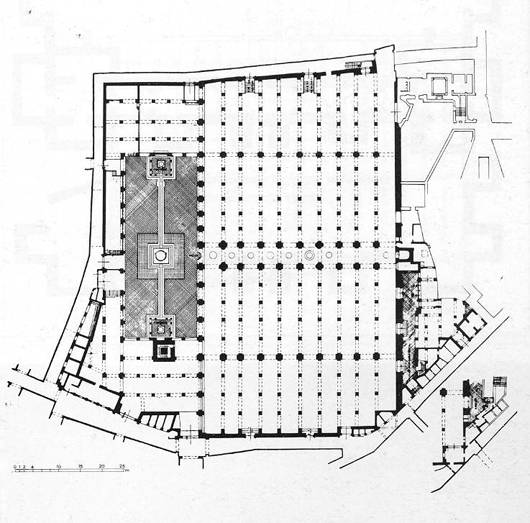
was at this time when you set the walled city that falls short of the historical of the city. This site went through two stages of expansion: The first in the ninth century, and one in the eleventh century, which greatly expanded the area but was not completed until several centuries later, under Christian rule. During this period the river channel had changed, so that after enlargement of the eleventh century there were only two of that primitive oxbow lakes, located in the current Alameda de Hercules and the area near the door of El Arenal.
In 1248 the Castilian king Ferdinand III conquered the city for Christianity. However, this was not the exile of the artisans and merchants, so that the city no perdió su gran actividad comercial. En esta época debieron aparecer los arrabales de El Arenal (debido a la construcción de las Atarazanas) y La Macarena. Además, está el barrio de Triana, de rigen seguramente anterior.
Durante los siglos XV y XVI Sevilla se convirtió en la puerta de los viajes atlánticos que permitieron la conquista de Canarias y América, construyéndose gran cantidad de edificios emblemáticos como la Casa de la Contratación y el Ayuntamiento. La ciudad se extiende extramuros y prueba de la importancia de estos nuevos núcleos es la construcción de Hospital de las Cinco Llagas (actual Parlamento Andaluz), that once was considered one of the best in the world. Although throughout the seventeenth and eighteenth centuries its commercial importance was declining, and also built important buildings such as the monastery of La Cartuja, the Royal Tobacco Factory and the Royal Mint. It was in 1771 when he made the first map of the city of Seville, at the request of D. Pablo de Olavide, which is the first authoritative document the state of Seville in other eras.
During the nineteenth century, great changes, at both provincial and urban areas, particularly highlighting two: the demolition of the walls and the arrival of the railroad. Demolition the walls due more to hygienists criteria the need for a major expansion, it took many years to actually expand the city walls. The arrival of the railroad marked the arrival of modern technology to the city, but was also a barrier, a new wall, which is still difficult to break.
During the twentieth century city was revived by two international exhibitions. The first was the Latin American Exhibition of 1929, which led to an initial urban expansion with the creation, among others, Avenue La Palmera, Reina Mercedes, Heliopolis ... After this time the course was structured Guadalquivir River, which end up being "cut", and streams were channeled Tagarete, Tamargillo and Guadaira, in order to prevent catastrophic floods such as those of the fifties.
During the period that reaches about 1980 the city grew considerably due to the widespread phenomenon of rural exodus. On the occasion of the celebration of the Universal Exhibition of 1992, the city took a series of planning measures among which the arrival of high speed train (AVE) to the city, the construction of SE-30 and new bridges across the river, too "open" on the occasion of the exhibition, in an attempt to return to the city that relationship for so many centuries had.

 Alhambra Nasrid Palace, Granada, Spain (14th century) . Plan.